
Sitting or Lying Hyperbaric Chamber: Which Is More Practical at Home?
The best design is not simply one with more seats or higher pressure. It is the chamber that fits your body, room, entry needs, and daily routine.
1. What Do “Sitting” and “Lying” Mean?
These words describe position. A sitting model may be upright or reclined; a lying model is horizontal or partly raised. They do not define pressure, oxygen delivery, or capacity.
Many air-pressurized systems deliver oxygen through a mask instead of filling the chamber with high-concentration oxygen. Check the exact model.
2. Picture a Typical Session
Inside a Sitting Chamber
You may read, watch a screen, or talk. Check seat angle, headroom, knee clearance, and legroom.
Inside a Lying Chamber
You may use a mattress and pillow and rest in private. Check diameter, shoulder space, windows, and room to sit up.
Neither position is proven universally better for HBOT results. Comfort is not evidence of greater oxygen absorption.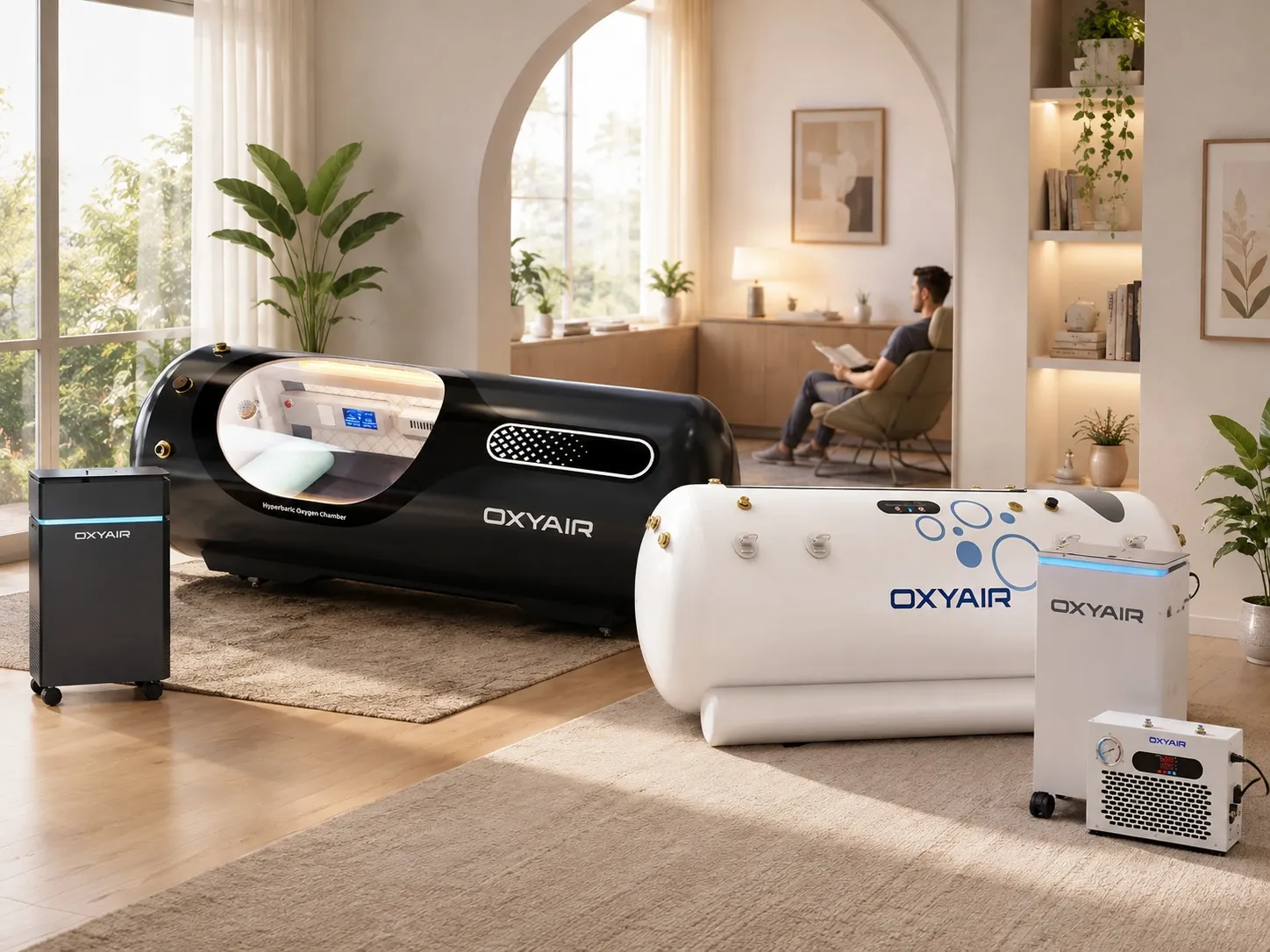
3. Comfort Is More Than Body Position
Body support
Check lumbar support, seat depth, and legroom in a sitting model; check mattress, head support, usable length, and shoulder room in a lying model.
Temperature, light, and communication
Ask about airflow, climate control, windows, lighting, outside communication, and internal controls.
4. Which Design Is Easier to Enter and Exit?
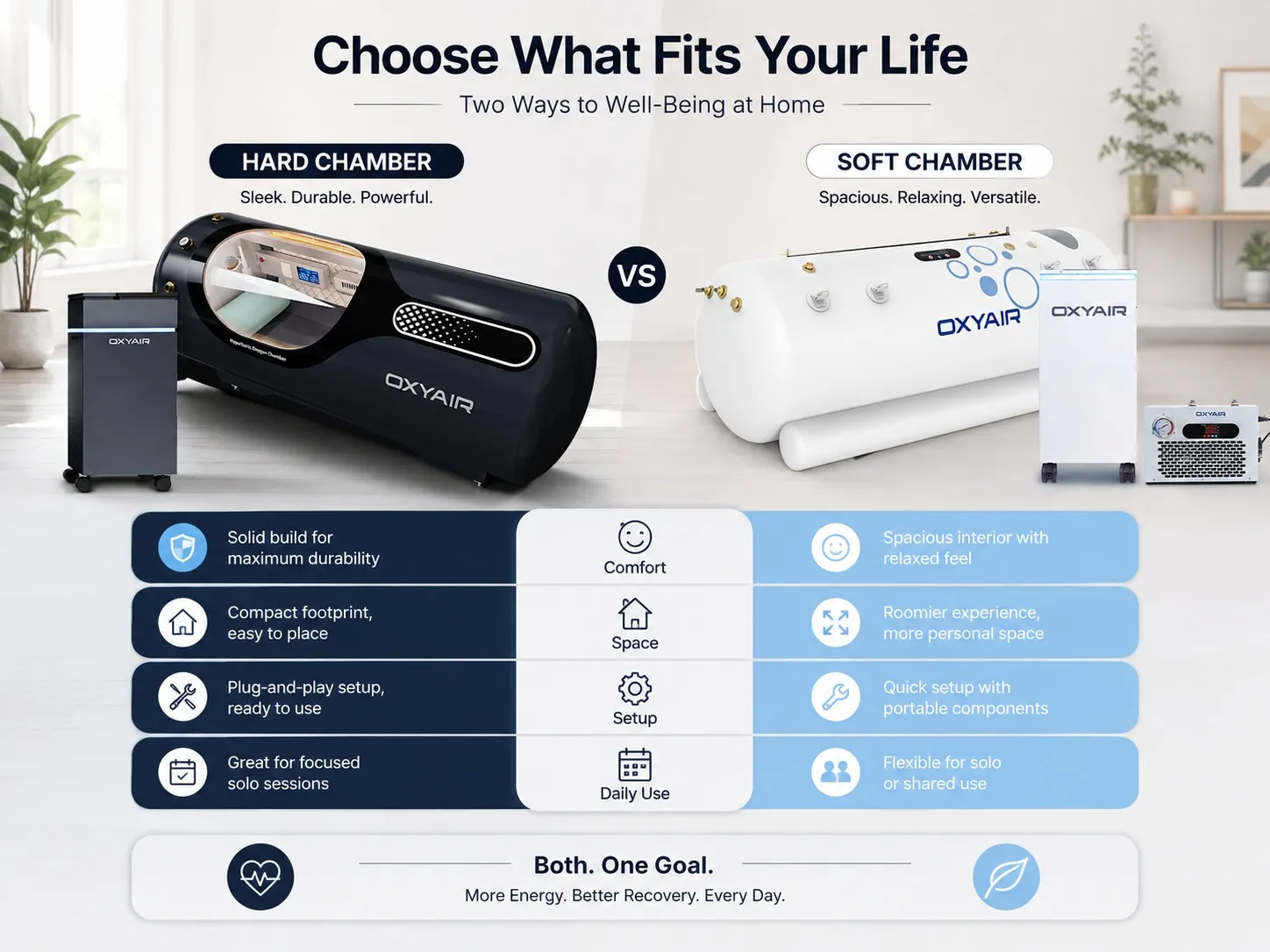
There is no universal winner. A walk-in sitting chamber may suit some users, while a wide side door or sliding bed may make a lying chamber easier for others.
Before ordering, check:
- Door width and threshold
- Side-door, end-entry, or zipper access
- Seat or mattress height
- Space to turn, sit, and stand
- Handles, steps, or assistance
Do not assume a sitting model fits every person with limited mobility. Review the opening, layout, and user needs.
5. Match the Chamber to Your Room Shape
| Room Situation | What to Consider |
|---|---|
| Long, narrow room | A lying chamber may fit along a wall but needs enough access length. |
| Limited room length | A sitting design may be shorter but require more width and height. |
| Upstairs room | Check weight, stairs, elevator size, and turning space. |
| Shared area | Consider equipment sound, ventilation, heat, and privacy. |
Measure the room, ceiling, doorway, hallway turns, and outlets. Add the compressor, oxygen equipment, cooling, door movement, ventilation, and service area. Chamber dimensions are not the complete footprint.
7. Is Extra Capacity Worth Paying For?
For a home buyer, value is not business ROI. A second seat may be worthwhile if used regularly. Otherwise, it may add size and cost without much daily value.
Ask yourself:
- How often will two people use it together?
- Would you pay more for privacy?
- Will it fit the delivery route and room?
- Can you manage cleaning and maintenance?
- Are training, warranty, and parts available?
8. Specifications to Request Before Buying
| Ask For | Why It Matters |
|---|---|
| Internal dimensions | Body fit, legroom, and preferred position |
| Opening dimensions | Practical entry and exit |
| Complete footprint | Room for all supporting equipment |
| Pressure range and cycle time | Operation and daily scheduling |
| Oxygen interface | Source, flow, mask or BIBS, and exhaust route |
| Noise test conditions | Sound from the complete operating system |
| Support | Setup, training, cleaning, warranty, and parts |
9. Frequently Asked Questions
Is a sitting chamber more comfortable?
It may be for people who prefer an upright or reclined seat. Others find full-body support in a lying chamber more relaxing.
Does a lying chamber always take up more space?
It usually needs more room length, while a sitting model may need more width and height. Compare the full setup.
Can two people use a sitting chamber together?
Only if the exact model is rated for two users and has the required breathing interfaces and operating configuration.
Does posture change effectiveness?
There is not enough direct evidence that posture alone determines effectiveness. Pressure, breathing gas, duration, and device design are separate factors.
Find a Chamber That Fits Your Home
Share your room size, preferred position, number of users, and comfort priorities.
Ask for a RecommendationReferences
U.S. FDA: Safe Use of HBOT Devices · PubMed: Hyperbaric Chamber Design